Key takeaways
- A GFCI cuts power in a fraction of a second when current leaks to ground, protecting people from shocks.
- They are required near sinks, bathtubs and showers, outdoors and around pools and hot tubs.
- A GFCI that trips often is warning you about moisture or a fault. Do not replace it with a regular outlet.
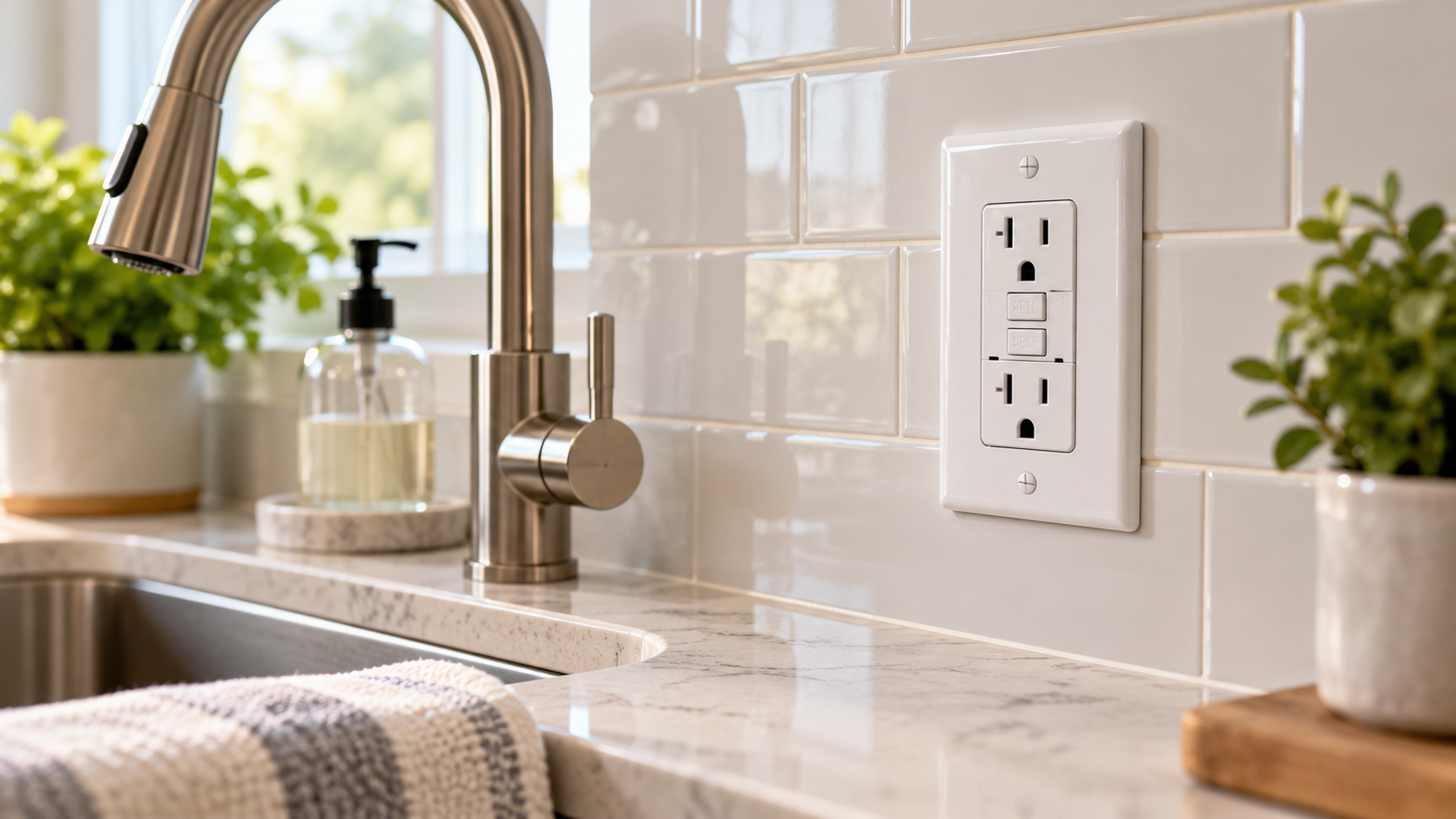
GFCI stands for ground fault circuit interrupter. It is the outlet with the test and reset buttons you see in bathrooms and outdoors, and it is one of the most effective shock protection devices in your home.
What a GFCI does
A GFCI constantly compares the current going out on the hot wire with the current coming back on the neutral. If a small amount goes missing, it is leaking somewhere it should not, possibly through a person. The GFCI cuts power in a fraction of a second, fast enough to prevent a serious shock.
Where GFCI protection is required
The Canadian Electrical Code, which Ontario adopts as the Ontario Electrical Safety Code, requires ground fault protection in places where water and electricity meet. In homes that includes:
- Receptacles near sinks, bathtubs and showers, including bathrooms and kitchen counters close to the sink
- Outdoor receptacles
- Receptacles and equipment around pools, hot tubs and spas (see hot tub wiring)
- Other specific locations listed in the code, which an electrician will identify during a renovation
Protection can come from a GFCI receptacle, which can also protect outlets downstream of it, or from a GFCI breaker in the panel.
Why GFCIs trip
- Moisture in an outdoor outlet or fixture
- A faulty appliance or extension cord
- Damaged wiring
- An aging GFCI device
If one trips repeatedly, unplug everything on it and reset. If it still trips, have it checked. Never swap a GFCI for a regular outlet to stop the tripping, since that removes the protection.
Test them monthly
Press the test button. The outlet should go dead and the reset button should pop out. Press reset to restore power. If it does not trip, the device needs to be replaced.
Adding GFCI protection
Older homes often lack GFCI protection in bathrooms, kitchens and outdoors. Adding it is a quick, affordable safety upgrade, and we often do it alongside other work. See our residential electrical services or call (905) 931-4522.
Frequently asked questions
What is the difference between a GFCI and a regular outlet?
A GFCI monitors for current leaking to ground and shuts off power almost instantly to prevent shocks. A regular outlet has no such protection.
Why does my GFCI outlet keep tripping?
Common causes are moisture, a faulty appliance or cord, damaged wiring or a worn-out device. If it trips with nothing plugged in, call an electrician.