Key takeaways
- Ontario requires working smoke alarms on every storey and outside sleeping areas.
- CO alarms are required near sleeping areas in homes with fuel-burning appliances, a fireplace or an attached garage.
- Hardwired, interconnected alarms sound together, so everyone hears a fire anywhere in the house.
Smoke and carbon monoxide alarms are the simplest electrical upgrade that can save a life. Ontario has clear rules about where they are required, and hardwired, interconnected alarms go a step further than the minimum.
What Ontario requires
- Smoke alarms on every storey of a home and outside all sleeping areas, under the Ontario Fire Code.
- Carbon monoxide alarms next to sleeping areas in homes that have a fuel-burning appliance such as a gas furnace or water heater, a fireplace, or an attached garage.
- Landlords are responsible for installing and maintaining alarms in rental units.
New homes and many renovations go further. The building code requires hardwired smoke alarms in new construction, interconnected so that when one sounds they all sound.
Why hardwired and interconnected?
Battery-only alarms work, but batteries die and get borrowed for the TV remote. Hardwired alarms run on your home's power with a battery backup for outages. Interconnection means a fire in the basement sets off the alarm outside the bedrooms too, which can make a real difference at night.
What an electrician installs
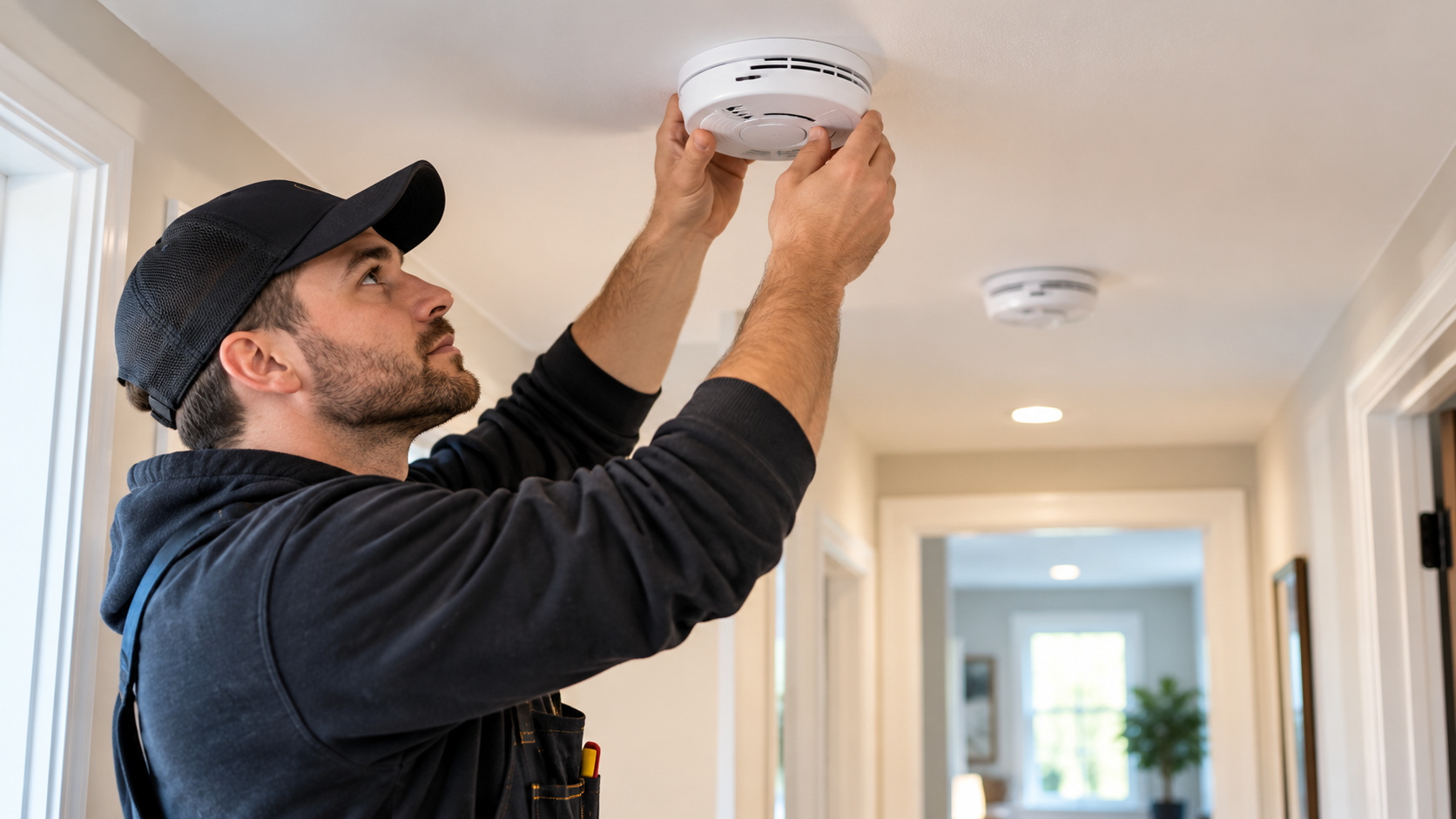
- Hardwired smoke alarms and combination smoke and CO alarms on a suitable circuit
- Interconnection between alarms, with wire or with listed wireless interconnect units
- Placement that follows the code and the manufacturer's instructions, away from kitchens and bathrooms that cause nuisance alarms
- Replacement of alarms that have reached the end of their service life, which manufacturers typically put at about 10 years
Good times to upgrade
Basement finishing, kitchen renovations and additions are ideal times to add hardwired alarms because the walls and ceilings are already open. Landlords preparing a unit and buyers moving into an older home often upgrade too.
FM Electric installs hardwired smoke and CO alarms across the Niagara Region as part of our residential electrical and renovation wiring services. Call (905) 931-4522 to book a site visit.
Frequently asked questions
Are hardwired smoke detectors required in Ontario?
They are required in new construction and are commonly required when areas are renovated. In existing homes, the Fire Code requires working alarms on every storey and outside sleeping areas, and many owners choose hardwired interconnected alarms for better protection.
How long do smoke alarms last?
Most manufacturers recommend replacing smoke and CO alarms about every 10 years. Check the date printed on the back of the alarm.