Key takeaways
- A breaker trips to protect wiring from overheating. It is a warning, not the problem itself.
- Overloaded circuits are the most common cause and are often fixed with a dedicated circuit.
- A breaker that trips instantly, buzzes or feels hot needs a licensed electrician right away.
A breaker that keeps tripping is one of the most common calls we get across Niagara. It is frustrating, but the breaker is doing its job. It cuts power before a circuit gets hot enough to damage wiring or start a fire. The real question is why it is tripping.
1. The circuit is overloaded
Every circuit is rated for a maximum current, usually 15 or 20 amps for general outlets in a home. Plug a space heater, a kettle and a microwave into outlets that share one circuit and you can exceed that rating. The breaker trips after a few seconds or minutes, often when the last appliance switches on.
What helps: move high-draw appliances to different circuits. If the same circuit trips regularly during normal use, a new dedicated circuit is the permanent fix. Kitchens, home offices and garages are where we add them most often.
2. A short circuit
A short happens when a hot wire touches a neutral wire. The current spikes and the breaker trips immediately, often with a pop. Common causes are a damaged appliance cord, a loose connection in an outlet or switch box, or a nail or screw driven through a wire during a renovation.
If a breaker trips the instant you reset it, leave it off and call an electrician. Repeatedly resetting into a short is dangerous.
3. A ground fault
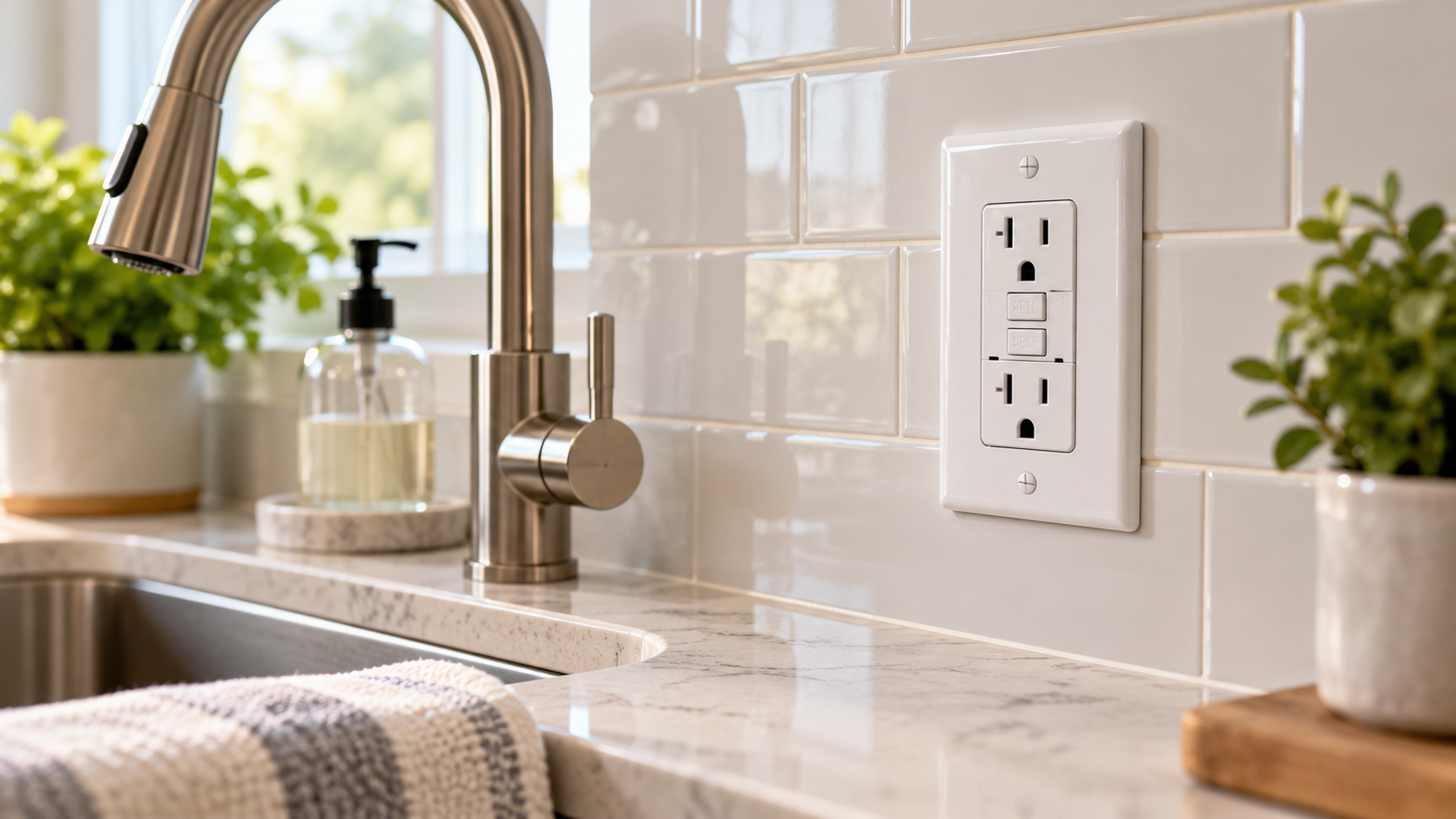
A ground fault is current leaking to ground, often through water. Bathroom, kitchen, outdoor and garage circuits are protected by GFCI devices that trip at very small leaks to protect people from shocks. Moisture in an outdoor outlet, a failing appliance or damaged wiring can all cause it. Learn more in our guide to GFCI outlets.
4. An arc fault or a failing breaker
Newer homes use AFCI breakers that detect arcing, the kind of sparking caused by loose connections or damaged cords. They can also trip because of certain motors or electronics. Breakers themselves also wear out over time, especially in older panels.
What you can safely check
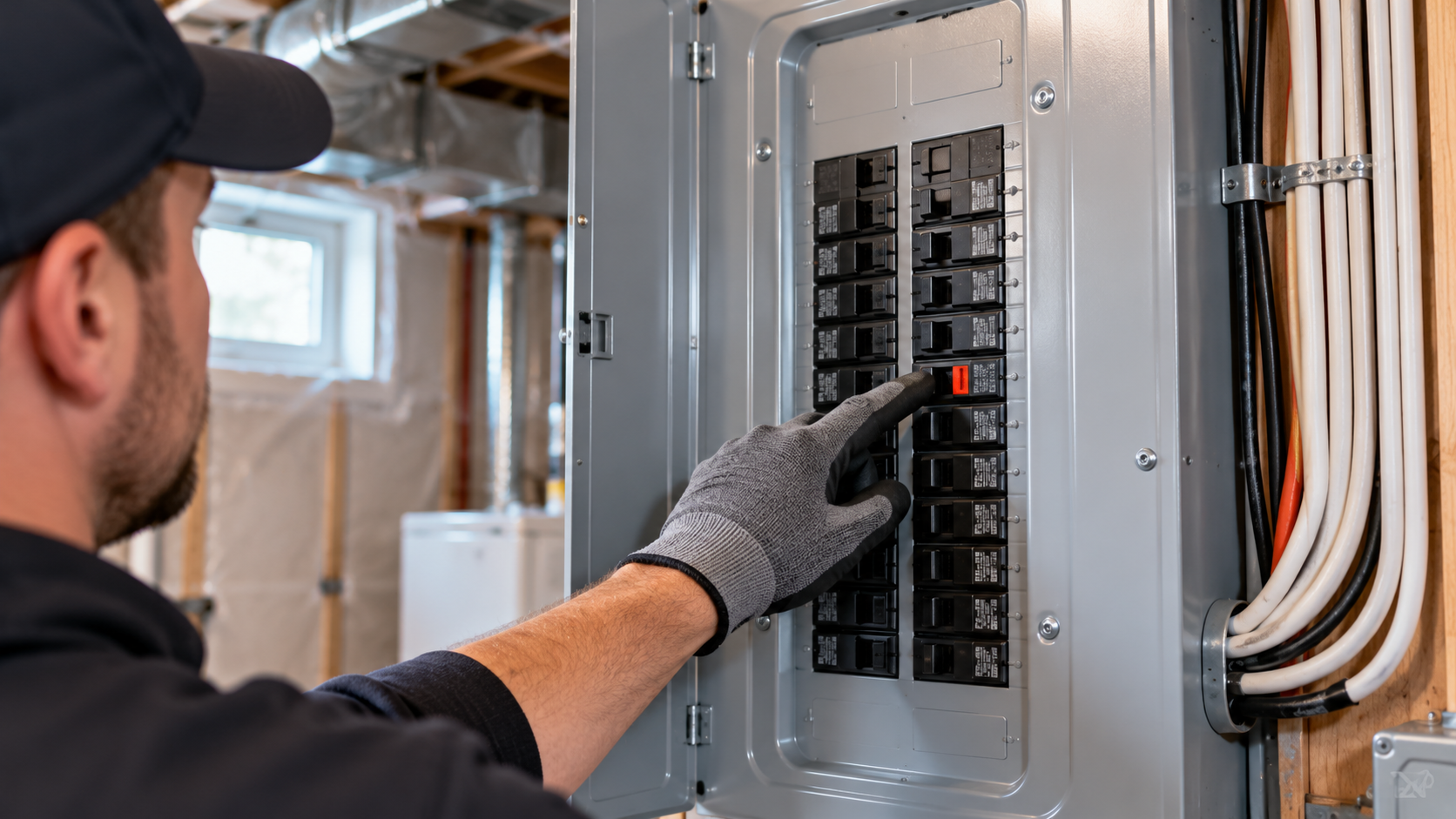
- Unplug everything on the circuit, reset the breaker, then plug items back in one at a time.
- Note what was running when it tripped and whether it happens at a certain time of day.
- Check outdoor and bathroom outlets for a tripped GFCI reset button.
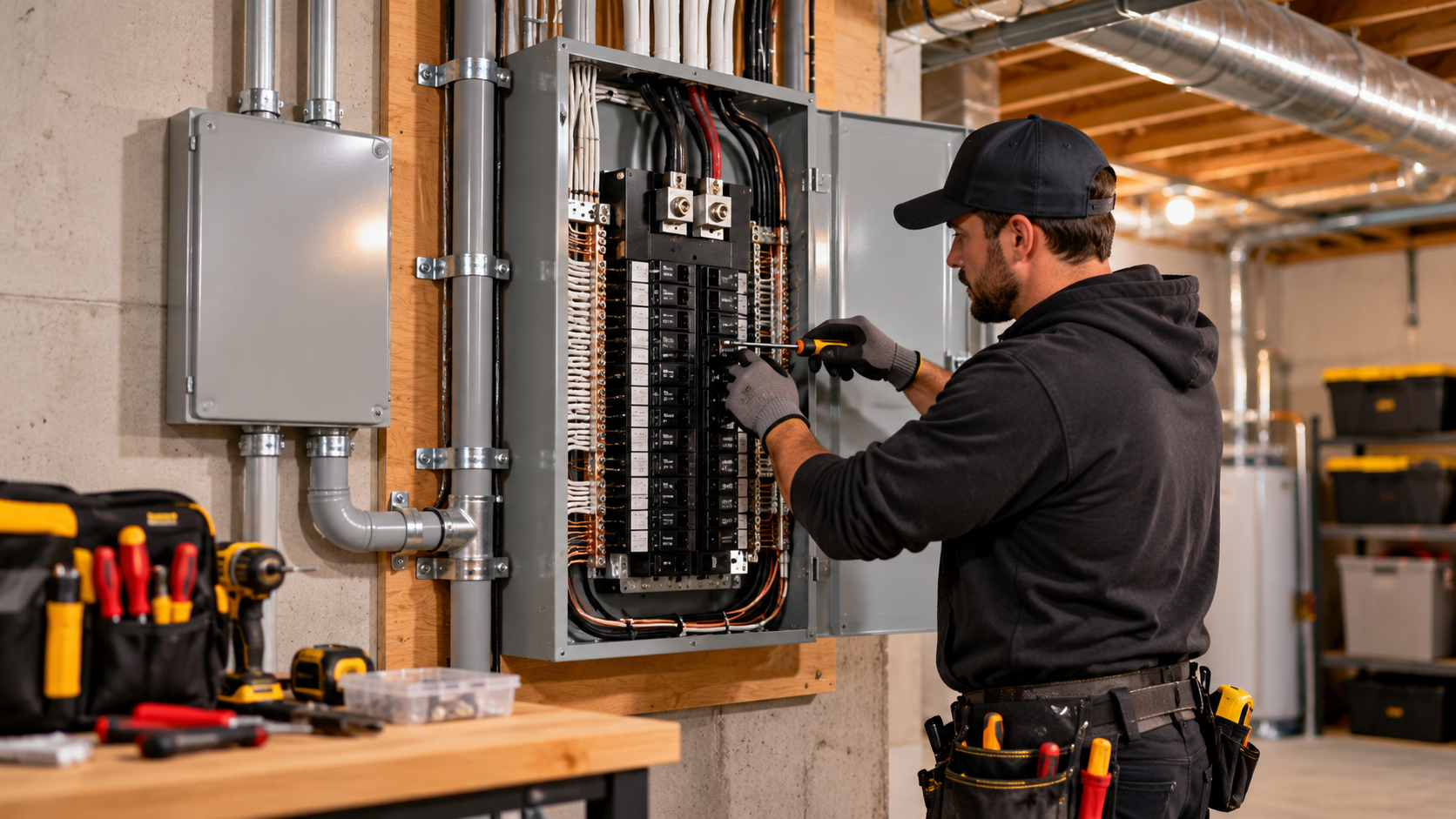
Do not open the panel, swap breakers for larger ones or tape a breaker on. A larger breaker on the same wire removes the protection entirely.
When to call an electrician
Call a licensed electrician if the breaker trips instantly, trips with nothing plugged in, feels warm, buzzes, or if you smell burning. If you see smoke or smell burning, leave the house and call 911 first. Frequent trips across several circuits can also be a sign your panel or service is undersized for how you use power today.
FM Electric troubleshoots tripping breakers across St. Catharines, Niagara Falls, Welland and the rest of the Niagara Region. See our electrical repairs and troubleshooting service, or call (905) 931-4522.
Frequently asked questions
Is it dangerous if my breaker keeps tripping?
The trip itself is the breaker protecting you. The danger is the cause, such as an overload, a short or damaged wiring. Repeated trips should be diagnosed by a licensed electrician.
Can I replace a breaker with a bigger one?
No. Breakers are sized to protect the wire on that circuit. A larger breaker lets the wire overheat before it trips.
Why does my breaker trip when it rains?
Water getting into an outdoor outlet, light fixture or damaged cable often causes a ground fault. Have the circuit inspected and the fixture or box sealed or replaced.